Cocoon, not cave
How to Make a Room Dark and Moody Without Losing the Light
A practical dark-room edit built around reflected light, material contrast and a reason for the atmosphere.
Quick answer
How can a small or dim room use dark colour without feeling flat?
A practical dark-room edit built around reflected light, material contrast and a reason for the atmosphere.
- Give the darkness a job. Dark colour works best where the room benefits from focus: a television snug, reading corner, dining zone or bedroom.
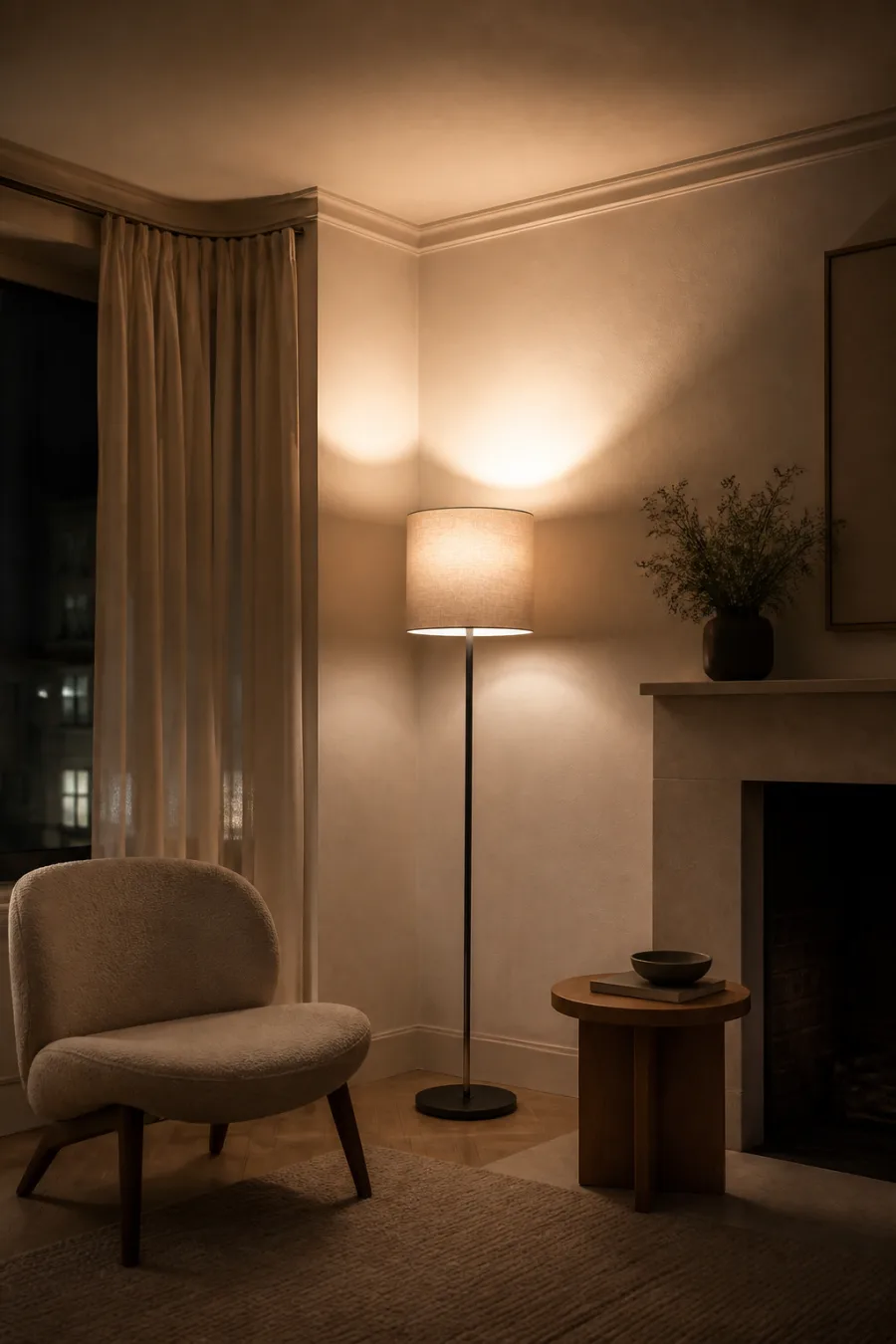
- Build three levels of light. Use a low lamp for tasks, a shaded source washing a wall or ceiling, and one small point of glow.
- Vary the surface, not the darkness. Combine matt walls with timber grain, bouclé, linen, glass or polished metal.
Start with what needs to work better. Add only what helps.
Give the darkness a job
Dark colour works best where the room benefits from focus: a television snug, reading corner, dining zone or bedroom. Decide what the atmosphere should help you do.
A purposeful cocoon feels intimate. A randomly darkened room can simply feel underlit.
Build three levels of light
Use a low lamp for tasks, a shaded source washing a wall or ceiling, and one small point of glow. Avoid asking a single bright ceiling fitting to rescue the whole scheme.
Position a mirror or reflective object where it catches the softest source rather than the brightest one. This spreads depth without glare.
Vary the surface, not the darkness
Combine matt walls with timber grain, bouclé, linen, glass or polished metal. When the colour range is narrow, surface variation makes the room readable.
Keep one visual exit lighter—the doorway, window treatment or adjacent wall—so the eye understands the room’s boundaries.
Keep it simple
Keep what makes the room easier to use. Everything else can wait.